Showing posts with label plan b. Show all posts

Friday, 14 September 2012

Why bother with Plan B? (review illManors)

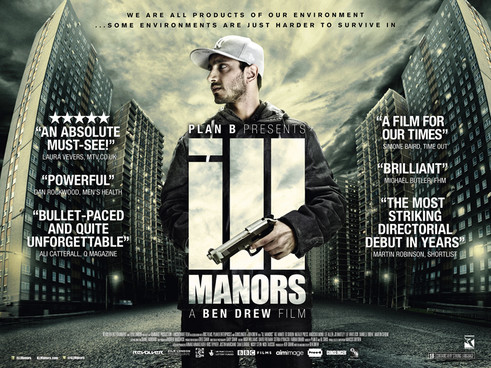
In May, when Ben Drew (Plan B)’s single illManors came out I compared him to Shakespeare. Now I’m back with a critical piece on his whole album of the same name; which has had a massive impact on my life.

 
As illuminated by the singles that he has released so far; illManors, Lost my Way and now Deepest Shame this album is very vocal. Drew is attempting to tell stories from his childhood and from the culture of Forest Gate in the late 90’s, ‘I’m a social commentator, socially commentating, what I say is verbatim’ (I am the Narrator); the stories which cover drugs, prostitution, assault, murder, newspapers and society, are based on real experiences of people from East London.

Due to the form and content of this album there is an interesting discussion to be had about a) what Drew is trying to do and b) whether it is any good.
a) Drew’s latest single release has involved Radio 1 playing Deepest Shame most days. The song tells the story of Michelle, sexually abused as a child who turns to drugs to numb the pain and then prostitution to fund the habit. By being played on the radio Drew is bringing the reality of generational poverty to all sorts of kitchens and living rooms!

The lines here between music as entertainment and music as protest are getting a little blurred. Drew said he wrote illManors as a response to the riots of last summer, as an attempt to be a voice for those unheard. He samples vocals from protest-punk poet John Cooper on his album (he performed at Music for Miners in 1984 and has a strong link to socially conscious music).

Drew makes several bold statements both to those he views as outsiders, ‘sorry mate, these ends are in a sorry state, you can’t relate’ (Falling Down) and to his own, ‘We aint no different from them, honestly. Luck is the only reason they weren’t born into poverty’ (Live Once). Yes, there is a degree of advocacy of the poor to the rich going on; see Kano’s rap in ‘Live Once’ but there is also an attempt at balance, illManors criticised both dependency on benefits and the Government’s economic policy, and a desire to educate – he gives a brief history of cockney and its uses in ‘Live Once’ and to challenge kids from the estates not to become self-fulfilling prophecies. I would argue that this authentic voice of Forest Gate is producing a voice from the street, for the street. There is far too much swearing to make government pay all that much attention; it is too easy to dismiss these words as those of an angry man who is out of control.

b) Is it any good? Yes, at conveying the violence and the struggles of the underclasses. But I would also like to suggest that Drew’s music is well crafted. Drew is unafraid of fusing high culture with rap; during ‘I am the Narrator’ he samples St Saën’s Carnival of the Animals, behind his rap he reclaims the high culture for everyday use. His narrative tale, Mr Drug Dealer, borrows extensively from the epic genre, taking each verse as an episode in Chris’ life – we follow Chris and the twists and turns almost as they play out in front of us. I saw significant parallels in form between Drew’s album and Perfect Strangers; both use the device of starting with a complete scenario and working backwards to explain how this circumstance came to be, like Drew’s lyrics, its clever. Clever literary devises of the lyricist, good use of sound from the poet and harmony from the musician; all from one man.

Several of my friends disagree with me that Drew’s work is art worth appreciating. I think there are a number of things that affect people’s appreciation of the work – language is a big one, style is another and definition of vulgarity also makes an impact. Essentially the question is, ‘Can a piece with violent content and explicit expression be artful, can it be beautiful?’ This question is actually one Drew addresses himself  ‘sorry mate…you can’t relate …you can’t appreciate how this artist paints’(Falling Down). I think there is objective quality in the art Drew creates; after all I did compare him to Shakespeare.

My encouragement to you would be listen to the record, with open ears and consider what you can learn about life, East London, and even yourself through it.

Monday, 28 May 2012

Shakespeare and Plan B - liminal artists and easy bedfellows?


Over the last couple of weeks I have been considering the role of artists (verbal, musical, theatrical, sculptural etc.) in society and specifically their ability to criticise politics.
Traditionally artists were kept on the edge of society, as travelling minstrels at Medieval courts or Elizabethan theatre players, or secluded artists, like Picasso, they formed micro-communities with their own social rules. They are citizens of their own countries but they are also uniquely placed to comment on society, as quasi-strangers in their own lands.
Throughout time the Arts have had this function, in Romeo and Juliet Shakespeare comments on Elizabethan social reform resound throughout Romeo and Juliet, where the Prince proclaims new rules and the protagonists fall foul of a system that cannot understand,  ‘What, ho! you men, you beasts/That quench the fire of your pernicious rage/ With purple fountains issuing from your veins’. In Hamlet Shakespeare similarly puts up a mirror to the Jacobean approach to monarchy (The King and the Playwright).The ability to critique contemporary government and society did not end with Shakespeare, at the Queen’s Jubilee arts evening Hockney said, ‘I don’t think we can quite rely on governments to see the bigger picture so we need the Arts’. Interesting that the Arts can say things that politicians or people in other contexts can’t.
The social commentary in Romeo and Juliet (when the men are brawling on the street) came to mind recently when I was listening to Plan B’s ‘ill Manors’. Music has long been the refuge for protest music; the Sex Pistols released the controversial  ‘God Save the Queen’ in the year of the Queen’s Silver Jubilee. Plan B uses his song to critique the current government’s policies impact on the poor to widespread acclaim. Showing the foolishness of Cameron’s hug a hoody, ‘He’s got a hoodie on give him a hug...on second thoughts you don’t want to get mugged’, the Olympics, how the poor can take advantage of the benefits system and accuses Boris of ‘rob(bing) them (Londoners) blind’. He can be quite clever with his wordplay, ‘We’ve got an eco-friendly government; they like to preserve our natural habitat’. His song can be summed up in his satirical play on the Conservative statement, ‘There’s no such thing as broken Britain, we’re all bloody broke in Britain’. These statements would be very weighty coming from the mouths of the protester but somehow from the mouth of a pop singer it encounters no such censorship. It has been played on all the major music channels and has been bought as a pop song by thousands, entering the UK charts at number 6. What is so special about the medium of song that makes that kind of commentary acceptable? (you can watch the video here)
Like Shakespeare, Plan B walks an interesting line here. Plan B samples Shostakovich’s Seventh Symphony, which just sounds like ‘classical music’, getting into bed with Conservative values, but the classical piece was created as a reaction to Nazi militarism, what does that suggest? Shakespeare counted the royals amongst his patrons but what does his generous portrayal of Henry VIII say to a Stuart court? And is Shakespeare’s Henry VI, part I an attempt to boost patriotism or a stern critique of it, just as England is fighting off the Spanish Armada?
What do you think the role of the ‘artist’ is in society? Do they even have a place? I’d be interested to know your thoughts.