Showing posts with label archaeology. Show all posts

Tuesday, 17 September 2013

Four autumnal adventures

 The arrival of autumn has been hurried to say the least, as I type in my cardie and jeans I’m wondering how just last weekend I was in t-shirt and shorts! I have been having all sorts of adventures but I wanted to take the opportunity of reviewing a couple of them here.

Home Free – film premiere

My good friend Stephanie Hazel has joined force with the sensational Amber Bayley to produce the short-film Home Free which explores public attitudes to homelessness particularly in the Brighton and Hove area. Can a homeless person be a hero? Can love cross the housing divide? The show portrays a realistic view of homelessness which will challenge common misconceptions of homelessness; it does so with great gentleness and is accompanied by a lovely low-key soundtrack. It was my great pleasure to attend the premiere of Home Free in the atmospheric venue of West Street Loft – this film will hopefully become available to the public soon.

Marks Hall – heritage day

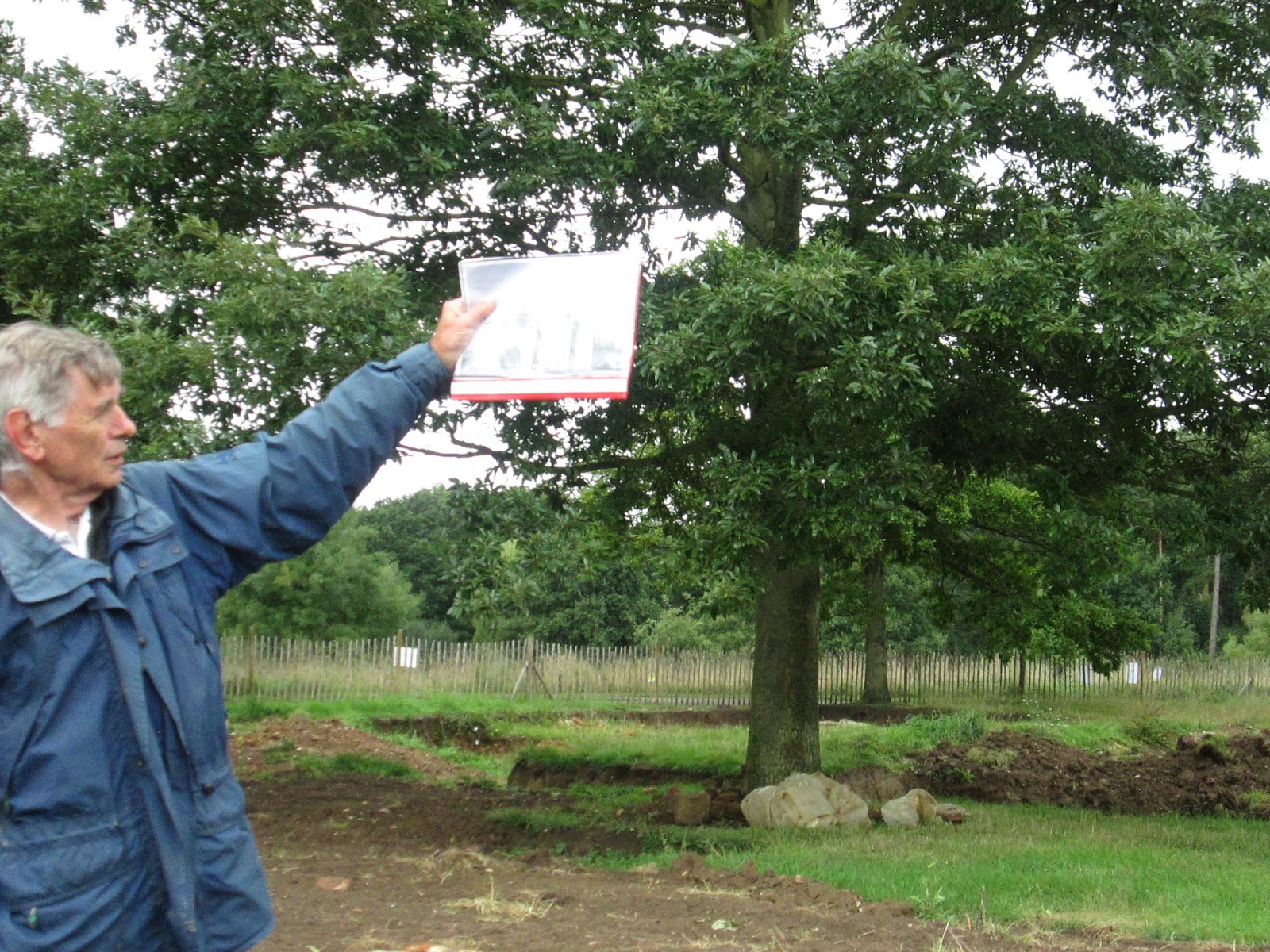
Marks Hall is a large estate in Coggeshall, handed over to the public in the 1930s. The extensive property has been filled with forests, walled gardens and meadows – it would be a brilliant place to take active children or pet! The hall itself was demolished in 1950 – the most recent incarnation of buildings on this site from at least the Tudor period. Archaeologists have been exploring the site over the last few months looking for outlines of the building and clues about the lives lived there, on Saturday they hosted an open day with tours of the site. Finds included a complete Neolithic axe-head, and the largest collection of Hedingham ware in the country. The pottery combined with several boars’ teeth in the nearby middens would suggest this site had been a high-status site for many centuries. More recent finds include the pulley systems for calling servants, a Victorian doll and a thimble. I was fascinated by the thought of doing archaeology on a site which had stood firm until so recently…proving you really can find out new information through archaeology from a site in use less than 100 years ago!


Orphan Black –TV series
Bad news guys, BBC iPlayer have started premiering series online before they hit our TV screens. One of the shows in this series, as well as guilty pleasure Bad Education, is Orphan Black – a dark tale of mistaken identity. Sarah witnesses the suicide of Beth and noticing a close resemblance to her own self decides to take on Beth’s identity of in order to escape some of life’s inconveniences. Unfortunately Beth’s life is hardly peachy either and Sarah gets more than she planned through the swap. The opening to this sci-fi thriller was unexpectedly gripping and I will be booking myself some iPlayer time very soon to see episode 2. Although I will be waiting some time, it doesn’t come out on telly til the end of the month!


Project Space: Word. Sound. Power – Tate Modern

What do you do when you have spare time in London? One of the things I like to do is visit free museums. Word. Sound.Power is the first exhibition you come to when approaching the Tate Modern. WSM is a multi-genre exhibition examining the strength and impact of words to influence new ideas, identity and even systems of power. There are rappers from inner-London estates, films of Indian orphans, and photos of roof-top gangs. It is a highly emotive exhibition directly illustrating that words and even sounds (where one is unfamiliar with the language) can indeed have great power. The message of the exhibition is clear – even those with minimal political agency have a voice and could do great things when they raise them.

Words. Sounds. Power is a collaborative curatorial exchange between the Tate Modern London and Khoj, International on at the Tate Modern until 3rd November and is free to visit. 

Saturday, 5 January 2013

Belfast: Borough of Barriers and Boats


Happy New Year everyone! To celebrate the turning of the years I thought I’d do pot-luck with my local airport – I went off to Belfast for 48 hours. It was a good time, although the weather didn’t really allow for much wild adventuring; I spent a lot of time contemplating barriers and boats.

Barriers

I first became aware of the ‘Troubles’ in 1996; I was 7, my Dad was going to London and the IRA had just bombed Canary Wharf. All I understood was, ‘the Irish are angry with us; and that’s why there are no bins’ but still a fairly nuanced understanding for a 7 year old. Then in Year 7 I read a book about a Romeo-and-Juliet-style couple split by the Trouble  centred around the Falls Road. I remember being struck by the story and storing it away somewhere for later use.

Shankhill Road

Later I studied ‘Archaeology of Modern Conflict’ at UCL;  we thought about wall murals and how these can be expressions of identity in civil war contexts. I decided I’d get a closer look and, much to my parents consternation, made a b-line for the Shankhill Estate. Shankhill is a protestant estate with much evidence of said on display. Union flags festoon the streets and there are lots of murals celebrating the centenary of the ‘Covenant’ (when the government in Belfast voted to stay with the UK in 1912). The established ‘Shankhill murals’ are  in the middle of a normal housing estate where normal people live. I saw no trouble while I was there, the only other people around were Shoreditch archetypes, all woollens and digi-SLRs; taking great interest in the repaint peace project and arty photos of the murals; apparently in summer the place is awash with tourists and the bus tours make good money. I walked down Cupar Way which reminded me of the Berlin wall, all arty and ‘give peace a chance’ but still rather substantial; and then onto Falls Road – the Catholic equivalent of Shankhill – Bobby Sands took a fairly central role here and I saw no tourists. 


Cupar Way

On both sides of the wall there was a roaring trade in memorials and a rhetoric of martyrdom. One mural in Shankhill represented nicely some of the thoughts I was having, ‘nothing about us, without us, is for us’; it was painted by someone who lives in Shankhill, for whom that landscape isn’t a fascinating museum dedicated to a dark and mysterious past. The murals are painted on the walls of homes in a living district, I bought a pasty from the sandwich shop, I sent a parcel from a post office in a queue of people waiting for their pensions. No-one wants to live in a goldfish bowl and be gawked at by tourists. Do we have any right to heritage-ise people’s living environment, and if so for what cause? And is it ethical to paint over memorials in the name of peace?

Shankhill Road
Cupar Way

Boats

On my second day I ventured to the ‘Titanic Quarter’; a modernised dock which took my head straight to Dusseldorf and Hamburg where similar regeneration projects have taken place. It’s really modern and features a shopping centre, museums, cafes and art works. On the way I stopped at the Belfast Barge – a thoroughly impressive, although poorly advertised museum. It’s free and it’s on board a boat – what’s not to love! Ok, what I really appreciated about the barge was how many ways it made its point – dressing up clothes, more information in drawers, DVD and touch screen features, testimonials and models – and the clever use it made of the limited space available. I even had a go at hammering in a rivet!

Belfast Barge

I decided to give the newly opened ‘Titanic Experience’ a miss on the advice of a fellow hostel user; ‘you pay £13 and then you can’t touch anything, it’s all lights and sounds and stuff’. Instead I walked an extra half a mile to the ‘authentic Titanic experience’ at the Pump House and Finishing Dock complete with real life tour guide AKA an actor seeking employment. I spent an hour being told many interesting tales of the Titanic’s creation and thought the physical impact of standing inside a giant concrete dry-dock was quite substantial. All the advertising for the Pump House was around it being the ‘authentic’ museum, what did that mean? Authentic because the boat actually rested there for 2 days, authentic because you can actually see and touch things that touched the Titanic? All the time conveniently ignoring the reality that some 2,000 other ships also passed through the same dock. Not sure, but there is something about being able to physically ‘touch’ the past which registers in a different part of my brain and is expected by the audience when they visit a ‘museum’,  that the ‘entertainment experience’ of ultra-modern museums doesn’t touch…plus it was half the price of the other one!

Authentic?

My holiday wasn’t a constant sociology exercise; honourable mentions also go to Ulster Museum (an amazingly in-depth history of Belfast and a lovely collection of butterflies), Maggie May’s cafĂ© (cheap milkshakes bigger than tankards) and Belfast YHA (which was my accommodation for the trip). Looks like I got back just on time too. See you soon for some foreign film reviews.