Thursday, 10 October 2013

Berlin Diaries II: Exposed brickwork, flea markets and country houses

Day 4 in Berlin, we woke early and packed up our things, already concerned by how we were going to compress all the luggage into the mandatory single piece of hand-luggage. We boarded The Ring train, noticing only on our last day that direction was represented in the ring icon as well as the locations listed…oh well.

We were headed for Dascha, another of Luke's recommendations; as the lady wasn't prompt in opening up and time was of the essence we found breakfast down the road in this kooky venue, all exposed brickwork and second-hand furniture. Mercifully this morning was wasp-free and wifi-enabled!

(Kooky breakfast)

From breakfast we headed to a flea market in the north of the city. We arrived promptly at 10:30 but the park was already packed, the stands rammed full of potential customers. The majority of stands featured standard content; scarves, records, vintage clothes, jewellery; one particular stand stood out, it sold watches and jewellery but was manned by an eccentric gentleman in a top-hat. Sometimes display really is everything…

(Flea Market)

Potsdam
From the hectic flea market we boarded The Ring in the opposite direction, towards Potsdam. Like Oranienburg, Potsdam is about 1 hour's travel from Berlin city centre. Potsdam is a town of great consequence. Kaiser Wilhelm built a country house, Schloss Cecilienhof. Hitler claimed to be his heir by marching through the city. Churchill and the allies met here to decide the division of Germany at the Potsdam Conference, and the Red Army also had a presence here. 

Schloss Cecilienhof
I headed for Schloss Cecilienhof, boarding a local bus and praying I'd be reunited with my ally before we boarded our flight home. I was merrily minding my own business when I was ambushed by a troop of some 20 exhausted English tourists and their tour guide, quite possibly a Miranda Hart voice-double on the weekends, promising they 'will never need to run again'.

(Miranda tour-guide)

The house itself was like a little slice of England, built by Kaiser Wilhelm, grandson of Queen Victoria for his wife Cecilia. It was a gloriously sunny afternoon in a park full of peace, and flowers, gold leaf and lovely boats. I really would recommend a visit in the afternoon in good weather. Entry to each museum building charged separately, main house 6€ - I just walked round the gardens, for free.


Park Sans Souci
After a brief nerve-wracking moment my friend and I were reunited and we headed for Park Sans Souci, Frederick the Great's pleasure palace and gardens, created in the 18th century. Comparisons could reasonably be made with Versailles or Hampton Court, the gardens were all fountains and landscape gardening. We saw gods and goddesses, muses and even soldiers dressed up in full-Regency livery. We enjoyed our little moment of luxury, it seemed a world away from yesterday's experiences. I wouldn't have paid to go into any of the buildings, but maybe that's personal taste, I've never been that bothered by Regency history. We took some beautiful photos in the low-lying sun and met a charming, but shy young man (he was maybe 3?) at the railway station on the way to the airport.


Being in Berlin has, as always, been a pleasure. I've really enjoyed getting under the skin of this city, the veritable queen of reinvention. Needless to say I'll be back soon.

Wednesday, 9 October 2013

Berlin Diaries II: Harrowing

You might have noticed I've been in the habit of naming my blogs in threes; not today.

We set off to find breakfast at a leisurely pace, we were looking for Assel where, according to my Lonely Planet, 'both the seats and the toilets are kooky', the café had been long closed. Oh well, we resorted to the expensive, wasp-plagued but quite tasty, Oranium, unknowingly munching on melons in the heart of the prostitution area.

From here we jumped on the S1 to Oranienburg. The journey took about an hour, it was a sensationally sunny day. We watched the landscape becoming increasingly rural and the proliferation of summer houses for the enjoyment of all those urban Berliners. It felt like a great day to be alive and yet my mind was already conscious of where we were headed, and of the 20,000 people who had met premature deaths travelling this same route.

(S1)

Sachsenhausen
We were en route to Sachsenhausen concentration camp. I’d never been to a concentration camp before, I was frightened of the unknown and didn't want to go alone. But with my trusty companion at my side and lots of head knowledge from my MA course I approached the site with trepidation.

The first thing I noticed was they don’t charge an entry fee. This is not entertainment for tourists, this is education and no one is to be barred due to cost. Secondly you could opt to buy an audio guide; they fascinate me, the way they mediate your experience of historical sites, shaping the narrative and indeed my own experiences. I think the audio-guide helped to distance me from the very immediate emotions of being in such a place of death; audio-guides are usually reserved for country houses and battlefields long since disappeared.

The site itself is mainly levelled to the ground – with concrete demarcations of huts and other buildings. Some elements have been reconstructed such as a domestic hut so you can get a sense of scale and representative watch-towers. It is always difficult to know how to make monuments of these contested spaces; do you let them crumble or do you preserve them for posterity? I found the truck depot and mass-grave complex the most harrowing – all life and vitality had been totally quenched here in some very cruel ways.


Did you know that when the Russian liberators arrived they continued to use the camp to intern prisoners? They uncovered a mass grave of prisoners’ bodies in the 1990s.

Humans can be hideous.

Schloss Oranienburg
We headed for Schloss Oranienburg led on by the sounds of medieval instruments. It was a bit pricey to get in to the festival but we noted Oranienburg  had a pretty river, castle, gardens and a strange Russian shop. Our return journey was rather quiet.

(Schloss Oranienburg)

(Russian shop)

Mexikanische Essen

For dinner we returned to Warschauer Strasse (where I stayed last year) on the u-bahn; trying not to meet the eyes of those begging ‘change for joints’.We navigated our way through the stoned hipsters to Simon-Dach Strasse, a street lined with restaurants and came across this Mexican restaurant where we maxed out on burritos and cocktails. Great value, epic portions and tasty cocktails, A+.

Tuesday, 8 October 2013

Berlin Diaries II: Panorama, the Stasi, and wine

Day 2 saw a much prompter start because we’d booked tickets to see Berlin from above. There are lots of ways to do this including the Reichstag Tour, the Berliner Dom tour and even a hot air balloon (click here for what I thought). But this time we chose the famous Berlin TV-tower (fernsehturm), an alien spike that dominates the skyline with a viewing platform some 200 metres high. I’m glad we booked tickets online with VIP queue jumping tickets as the queues at the venue were mad!

Fernsehturm
It takes just 2 mins to cover the 200 metre climb in a space-age lift. The views from the platform were astounding, although thoroughly dependent on the weather. We could see for miles, roof gardens, apartments, road networks, the river, and the S-bahn looking like a train-set below us. The only slight frustration with this experience was the info panels ran in the opposite direction to the viewing route meaning I only discovered the significance of ‘that odd looking building’ after I’d viewed it.

3/5 quite pricey for what it was, and significantly dated, but amazing views.

(the viewing platform is in the centre of the grey blob)

(Alexanderplatz from above)


Stasi Museum
We continued our DDR-Berlin day by visiting the Stasi museum. It’s a long way east but worth the visit. After yesterday’s experiences I had high expectations for another of Berlin’s museums which were perhaps misplaced.

The Stasi Museum is set in the old offices of the Stasi – stepping over the threshold the weight of historical resonance falls firmly the on the shoulders. That said most of the exhibits are traditional ‘stuff in cases’ or rooms laid out as they would have been used during the Stasi regime. One part of the museum focussed on prisoners of the regime and put you in a seat opposite the ‘prisoner’ depicted by a biography panel. There were subtle layers of undertone here, of interrogator and interrogated, created through something so simple as two chairs and a bit of cardboard.

3/5 Hard going if you don’t like reading, but some fascinating objects.

(Meet the prisoners)


East Side Gallery
After the Stasi museum we proceeded to the East Side Gallery. This artistic monument fascinates me; it started life as original protest art whilst the wall was in use, then official artists were brought in to represent constituent voices, when most of the wall was demolished. Today it’s a tourist trap where people take photos of themselves and occasionally tag a wall. It’s a piece of history and yet it’s also a place to voice complaint on current affairs – the veiled role of exhibition curation as political response is so much more evident here. The walls address themes from state sovereignty, war and peace, to sexuality, national culture and freedom in a way that is perhaps more democratic than an official museum or speech? This famous painting of Brezhnev and Honecker has been significantly tagged since I was last here, in part in reaction to the current homophobic crisis in Russia. It’s interesting that this particular tag and many others have not been removed by state authorities.

(East Side Gallery)

We progressed quickly from the East Side Gallery to Starbucks via Checkpoint Charlie. We decided against the extortionate passport stamping ruse, get all 6 for just 5€. Er, no ta! And caught sunset at the Brandenburg Gate. Then I spent an extortionate amount on a handbag made from old lorries and seatbelts.

Weinerei Forum

Finally we ended up at the Weinerei Forum, one of the destinations recommended by Luke. We were not disappointed, we found warmth, cheap home-made food, free wifi, plentiful affordable wine, and surprisingly the good Lord who was hanging up on the wall, overseeing every glass. On Fridays the Forum offer wine tasting for just 2€, fill your glass with whatever you fancy! It was just what we needed after a long day!

(Weinerei Wine)

Sunday, 6 October 2013

Berlin Diaries II: Trabis, Bunkers and the DDR

I have returned to one of my favourite places in Europe for a long weekend, we’re jam-packing the experience so expect lots of reviews!

Arriving late last night we allowed ourselves a lie in and the clouds a chance to disappear. We left our apartment in Schöneburg on a bright and sunny morning in Berlin. After a brief caffeine stop we headed for Charlottenburg in search of the Kaiser Wilhelm Memorial. When I visited last summer the memorial was closed and undergoing renovation. And surprisingly, it was still closed this time.

Determined not to be disheartened there were many things to discover out west including a smart and elegant department store with a very elegant name, Douglas. Down the road we stumbled across an interactive museum housed inside a shopping centre.


This large museum is an interactive and bilingual experience aimed at getting you familiar with Berlin’s 800 year history. There are more than 10 topic rooms coming off a central corridor of time. The city’s rich history is explored through fashion, music, short films, photographs and artefacts. I learned lots of new things about Berlin, particularly in the regency period. 

The ticket price includes a tour of their onsite nuclear bunker, built in 1970 to house 3,600 Berliners for just 2 weeks. The airlock and bunker are all still operational but my friend and I were pretty clear that the bunker represented delayed death rather than any real hope of survival.

The Story of Berlin costs €10 and fits neatly into the current trend of museums as experiences of the past.

4/5 Bit expensive but high quality


We travelled back to the centre on the U-bahn – the livery of said vehicle is sunshine yellow, such a merry, optimistic shade, more underground systems should be yellow! We were taking a route towards Museumsinsel but made an important stop off at the Ritter Sport Chocolate shop. Like Mary Poppin’s hand-bag its bigger on the inside and allows you to make your own chocolate, buy their chocolate bars and learn about chocolate production – several bars later we crossed the centre of town, passing the beautiful Gendarmenplatz and the Berlin Dom on our way to Museumsinsel. My Lonely Planet claimed you could visit on a Thursday night for free; but as it turned out that information was out of date, a frequent theme on this trip.

Instead we found the excellent DDR Museum on the banks of the Spree. It’s a total steal at just €4. We arrived 1 hour before closing time so were quite tight for time, but could easily have spent more time there.

The DDR museum provides an interactive experience of life in East Berlin from the 1950’s – 90’s. The museum is set up thematically considering topics such as the home, education, fashion, and music. There are lots of games to play in this museum, our favourite being the opportunity to ‘drive’ a trabi car – experiencing first-hand the frustrations and joys of the vehicle, it was a lot of fun!

Passing under the mist of bureaucracy – a physical wall of mist – visitors enter the second section of the museum looking at conflict, law and order and the military. Again the curators have thought very creatively about using the space, with light-show games, and spaces set up as interrogation suites so visitors get a real sense of what it was like. One of my favourite installations was in the interrogation room. In order to hear the response of the defendant one had to put one’s elbows on these desk pads and cup your hands over your ears – inspired!

5/5 amazing value and high quality exhibit.


At the end of day 1 I know so much more about life in Berlin after WWII; tired but ready for day 2.

Tuesday, 17 September 2013

Four autumnal adventures

 The arrival of autumn has been hurried to say the least, as I type in my cardie and jeans I’m wondering how just last weekend I was in t-shirt and shorts! I have been having all sorts of adventures but I wanted to take the opportunity of reviewing a couple of them here.

Home Free – film premiere

My good friend Stephanie Hazel has joined force with the sensational Amber Bayley to produce the short-film Home Free which explores public attitudes to homelessness particularly in the Brighton and Hove area. Can a homeless person be a hero? Can love cross the housing divide? The show portrays a realistic view of homelessness which will challenge common misconceptions of homelessness; it does so with great gentleness and is accompanied by a lovely low-key soundtrack. It was my great pleasure to attend the premiere of Home Free in the atmospheric venue of West Street Loft – this film will hopefully become available to the public soon.

Marks Hall – heritage day

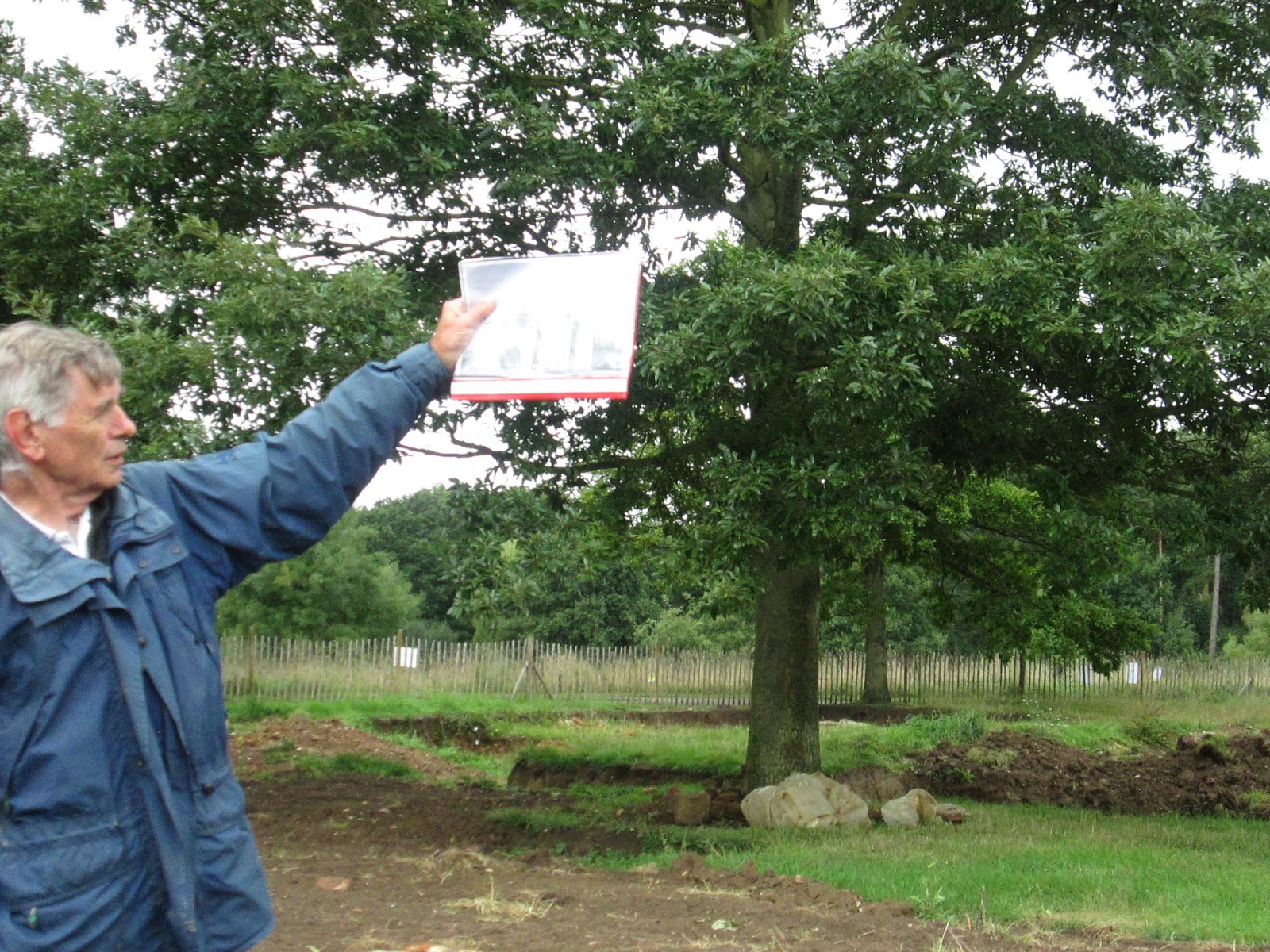
Marks Hall is a large estate in Coggeshall, handed over to the public in the 1930s. The extensive property has been filled with forests, walled gardens and meadows – it would be a brilliant place to take active children or pet! The hall itself was demolished in 1950 – the most recent incarnation of buildings on this site from at least the Tudor period. Archaeologists have been exploring the site over the last few months looking for outlines of the building and clues about the lives lived there, on Saturday they hosted an open day with tours of the site. Finds included a complete Neolithic axe-head, and the largest collection of Hedingham ware in the country. The pottery combined with several boars’ teeth in the nearby middens would suggest this site had been a high-status site for many centuries. More recent finds include the pulley systems for calling servants, a Victorian doll and a thimble. I was fascinated by the thought of doing archaeology on a site which had stood firm until so recently…proving you really can find out new information through archaeology from a site in use less than 100 years ago!


Orphan Black –TV series

Bad news guys, BBC iPlayer have started premiering series online before they hit our TV screens. One of the shows in this series, as well as guilty pleasure Bad Education, is Orphan Black – a dark tale of mistaken identity. Sarah witnesses the suicide of Beth and noticing a close resemblance to her own self decides to take on Beth’s identity of in order to escape some of life’s inconveniences. Unfortunately Beth’s life is hardly peachy either and Sarah gets more than she planned through the swap. The opening to this sci-fi thriller was unexpectedly gripping and I will be booking myself some iPlayer time very soon to see episode 2. Although I will be waiting some time, it doesn’t come out on telly til the end of the month!


Project Space: Word. Sound. Power – Tate Modern

What do you do when you have spare time in London? One of the things I like to do is visit free museums. Word. Sound.Power is the first exhibition you come to when approaching the Tate Modern. WSM is a multi-genre exhibition examining the strength and impact of words to influence new ideas, identity and even systems of power. There are rappers from inner-London estates, films of Indian orphans, and photos of roof-top gangs. It is a highly emotive exhibition directly illustrating that words and even sounds (where one is unfamiliar with the language) can indeed have great power. The message of the exhibition is clear – even those with minimal political agency have a voice and could do great things when they raise them.

Words. Sounds. Power is a collaborative curatorial exchange between the Tate Modern London and Khoj, International on at the Tate Modern until 3rd November and is free to visit. 

Friday, 23 August 2013

Review: The Secret Wives of Andy Williams

I have to admit I didn’t have a clue who the eponymous hero was. Apparently he's a crooner from yesteryear, recently deceased; despite not knowing who he was the show was still laugh out loud funny. 

(Andy Williams)

Caitlin is a naughty nun, she loves another man more than Jesus. In a bid for purity, and to escape her father, Caitlin becomes a novice at the craziest and kindest nunnery I have ever seen. Accompanied by a brood of crack-pot orphans and strict yet kind nuns, Caitlin battles with some deep issues; life, death, love, other people’s expectations (especially the dead ones) and the true adoration of Andy Williams. Whilst this play confronts serious topics Hasler’s excellent script accompanied by Mayhew’s direction, and the sterling efforts of the entire cast, meant the only time I cried it was with laughter! 

The show really is funny and this is partly down to style. A cast of four deliver at least 10 roles between them; Mitchell for example playing a Scottish nun, an orphan with imaginary siblings including a sister called Nietzsche, a cockney bloke, and a French romancer by turns was both impressive and simultaneously hilarious. I think the hair clips reinforced the reality of a bloke playing a nun in plain sight and enhanced the comedic effect. Similar contrasting roles such as Platt’s novice nun to drunken royal, and Hasler’s strict nun to west-country orphan, keep the play dynamic and entertaining. 

Being a show mainly concerned with death and comedy, black humour played its part; a bell-ringer with no hands, a deceased saint with her boobs on a platter, and a nun with a tv-signal clarifying brain tumour all feature. That said Hasler is also unafraid of confronting death, religion and love head-on. There are plenty of references to philosophy in the piece (come on, the imaginary sibling is called Nietzche!) but not in a way which is exclusive to the less academically minded. 

Hasler has rendered the religious characters in the play with great gentleness; the nuns are kind-hearted women, sheltered from the world by prayer times and a blanket of khaki Battenberg cake! Even God, or the ‘bugger upstairs’ as one character calls him, is depicted as a benevolent parent who just wants His children to have fun. The show was funny without being offensive, crude or irreverent – I was impressed that Hasler credits the audience with enough maturity not to go for the easy laughs about the frigidity of nuns! 

Not all the inhabitants of the nunnery are naive, and their reasons for being nuns are as varied as the counties they were reared in. Just like the average audience member the characters have true depth. One of the stand-out features of this show is the fact the characters are laugh out loud funny without being one-dimensional slap-stick comedy props.

Adults playing children and men playing women has been the recipe for laughter for centuries; but the way in which Hasler has used these methods to discuss philosophy make this an altogether different performance to the standard ‘comedy about nuns’ show you might be expecting. 

The show is part of the Camden Fringe Festival with a running time of 1 hour dead. It runs til Saturday 24th at the CamdenPeople’s Theatre. They are touring this Autumn, so catch them if you can!

Sunday, 18 August 2013

The White Queen: On paper and TV

The recent unveiling of The White Queen television series prompted me to read Gregory’s book. Herewith my analysis of both.

The White Queen: On paper

As you know I do enjoy Gregory’s historical novels. I always enjoy the way women are at the centre of her narrative; providing a fresh perspective to historical events where women are portrayed as agents of change in a traditionally male context. This is particularly the case in The White Queen which takes place at the courts of the fifteenth century York kings. 

We return to a familiar cast for this novel; Mary Beaufort, Elizabeth Woodville and Anne Neville, and to familiar themes; the role of fate, the secret agency of women, and the power of gossip in the courts of kings. It was really interesting to read accounts of common events from all three novels, such as the Battles of Towton and Barnet through a second character’s eyes, having already read the narrative from Anne Neville’s perspective (The Kingmaker's Daughter).

(Elizabeth Woodville discusses the situation with King Edward, image: BBC)

Variation from previous Gregory novels I have read include the use of folklore as a counterpoint to the main narrative. Gregory borrows extensively from the story of Melusina water-goddess with magic powers, said to be the ancestor of the Burgundians, to illustrate the experience of the Woodville family and Elizabeth Woodville specifically, from a second angle;

‘She [Melusina] knew that being a mortal woman is hard on the heart and hard on the feet…He promised her that he would give her everything she wanted, as men in love always do. And she trusted him despite herself, as women in love always do’

Use of the Melusina narrative also enabled Gregory to explore the perception of Woodville as witch; medieval philosophy credited witches with real power to change situations with their craft, enabled only through contracts with the devil. Throughout the novel Woodville uses witchcraft at key moments in an attempt to change the progress of events. 

I had some frustrations with this novel. The White Queen, whilst interacting first-hand with the popular story of the princes in the tower was otherwise plot-light; and not as rewarding as say, The Kingmaker’s Daughter. The story of Elizabeth Woodville involves plenty of time in sanctuary waiting for men to succeed or fail in battle, revolt or be suppressed. As a result the majority of the action in the novel happens on its periphery or through the eyes of men in battle. There were several times I was tempted to quit on this novel before the end; reading yet another chapter of Woodville in sanctuary got boring! 

The White Queen: On TV

With the recent ‘discovery of Richard III’ (I’m a sceptic) a TV drama surrounding the controversy of the princes in the tower is a no-brainer for the BBC. Stretched over ten episodes, as opposed to the traditional 6-part series, The White Queen attempts to synthesise three of Gregory’s novels into a single series.

There are several successes to this series; there is plenty of sex, violence and period costumes, all of these sell! Similarly, as I just mentioned, if there were ever to be a time when the general public were interested in Richard III it would be now. In addition, I have stuck with the series since episode 1 (despite a sensationally weak opening episodes) so something must be keeping my interest; perhaps it was the unique decision to portray male monarchy through female eyes…

That said, there are several weaknesses to representing this period of British monarchy on TV. Firstly, everyone has the same name regardless of which side they are on (and let’s face it lots of them swap!) which makes the plot tricky to follow.

This situation is made all the more complicated by a decision to blend three of Gregory’s novels into one series from multiple perspectives. I can see that this might create added drama, and that creating three series from three different perspectives would be dry. There are, however, reasons why Gregory writes from one perspective at a time; I think one of these might be character loyalty. From page one in Gregory’s novels we watch events through one person’s eyes; the drama of Warwick’s defeat at Barnet is uniquely painful through the eyes of his daughter Anne Neville (The Kingmaker’s Daughter) or the departure of the princes from sanctuary through Elizabeth Woodville’s (The White Queen). The strength of feeling is definitely lost when the perspective on common events is shared between the three women. I found very little compassion or interest for Mary Beaufort (mother of Henry VII), for example, who is one of the three women who feature in the series. I wonder if this is because, unlike the other two main characters, I haven’t read the narrative from her perspective (The Red Queen) rather than because she is an intrinsically unlikable character…

(Mary Beaufort as depicted in the series. Image: BBC)

In sum, I’d give the book maybe 6.5/10 (not as strong as The Kingmaker's Daughter) and the TV series 7/10 (with at least one of those points dedicated to retaining my interest for 10 episodes!). 

Catch The White Queen series and other related content on BBC iPlayer this week.


I’ve read another really exciting book recently, Ann Veronica by H G Wells; keep your eyes peeled for that!